MORSL's Interfaith Peace Garden, located at 3610 McTavish along the path to the main entrance, is visible evidence of dialogue on campus, care for the earth, and inclusion for all in the spirit of social and environmental sustainability. MORSL’s gardening activities, held from April to October, contribute to enhancing a sense of belonging as well as promoting interfaith and intercultural understanding for students from diverse religious, spiritual, and secular backgrounds through dialogue and cooperative action on campus.Ìý
The garden started in Spring 2023, when MORSL’s director Carlene Gardner saw an opportunity to create a great community experience with students out of the untended space at the entrance to MORSL’s building. After consulting with the ɬÀï·¬ Grounds team and receiving support from the Sustainability Office in the form of a Tiny Stream grant, the MORSL Interfaith Peace Garden was inaugurated in May 2023 – just in time for the Montreal gardening season!Ìý
An avid and skilled gardener herself (no last name pun intended!), Carlene invited student volunteers to come help clean up weeds and debris from the plot while getting to know each other. Each of the sessions brought about more transformations to the space, and generated enriching conversations that built a sense of community around this collective effort. Within the safe space of this interfaith project, students talked about their love of nature, family traditions, dating and marriage customs across cultures and spiritual experiences across faith traditions.ÌýÌý
Over the seasons, students learn useful skills, gain a greater attunement toward and knowledge of the natural world, reap the wellness benefits of being outside with their hands in the soil, and enjoy moments of deep connection and resonance across worldviews.ÌýÌý
Since its inception, the garden project continues to thrive thanks to student volunteers who are eager to connect with the earth and each other. Through planting and ongoing tending of the garden, this project is expected to continue for many years.ÌýÌý
Interested in learning about the types of plants volunteers & MORSL staff have planted in MORSL's Interfaith Peace Garden over the years? Want to learn the significance behind the plants you might find? Check out the list below!
| Plant (official & alt name) |
Photo(s) |
|
Symphoricarpos |ÌýSnowberry
Seen in the form of sparsely branched shrubs of 1-2m tall, the Snowberry species produces snow white berry-like fruit in the summer, with flowering ranging from white, pink, red, or purple following soon after. Currently, there are about 15 species of the Symphoricarpos, most of which are native to North & Central America. They can often be found growing in medium moisture soils, but are capable of surviving in most seasons, including dryer, colder conditions.Ìý
Native to North America, the name Symphoricarpos derived from Greek to mean “to bear together� and “fruit�, referring to the closely packed clusters of berries.
|
 |
|
Hosta | Plantain Lily
Named after the Austrian horticulturalist Nicolaus Host, Hostas are herbaceous perennial plants that known for their striking, broad foliage and upright, trumpet shaped flowers that bloom in late summer. Additionally, Hostas symbolize grace, resilience, love and devotion.
|
 |
|
Scilla siberica | Siberian squill; Wood squill
The Scilla siberica is a beautiful blue, open bell-shaped flower that typically blooms in mid-spring. Known to be tough, low maintenance, and winter-hardy plant that grows in rock gardens and woodlands, they symbolize perseverance, hope and the renewal – as its intense, vibrant colours even in the chilly weathers of early spring hints at the promise of warmer days on the horizon.
This plant is also highly toxic to both humans and animals; may be fatal if digested.
|
 |
|
Astilbe | False spirea; False goat’s beard
Astilbes, also known as False goat’s beard or false spirea, are herbaceous perennial plants, identifiable by their fern-like foliage and colourful plumes ranging anywhere from light pink to dark red. The term “beard� stems from the numerous tiny flowers that bloom, creating a bushy and ‘beard-like’ texture. Known for their tough nature, Astilbes thrive well in full shade and well-drained soil.
Astilbes symbolize patience, perseverance, dedication, and love. Additionally, Astilbes contain traditional medicinal uses, often known for its anti-inflammatory properties.
|

|
|
Convallaria majalis | Lily of the valley
Lily of the Valley is a low-growing perennial, identifiable by its white or pink bell-shaped flowers in the spring. When planted, they produce a fragrant and sweet scent – which is why they are often used as a fragrance note in perfumes. They can, however, spread aggressively and are known to be toxic in all parts.
Most often, the Lily of the Valley symbolizes purity, happiness, humility, and renewal. In Norse mythology, Lily of the Valley was linked to Ostara, the goddess of spring. In Christianity, the lily of the valley flowers are often thought to symbolize tears, as it is said to have first bloomed when Eve shed tears after expelled from the Garden of Eden as well as when the Virgin Mary’s tears were shed at Christ’s crucifixion.
|
 |
|
CrocusÌý
Even with the lingering winter, crocuses are known to push through the snow & lingering frost to provide a sprinkle of colour into one’s garden. Crocuses come in a variety of sizes and colours (blue, purple, yellow, white, etc.), blooming in early spring to produce distinctive, cup-shaped flowers with six petals.
The name Crocus traces back to the root word for saffron in Sanskrit. Saffron, a spice that is also used as a natural yellow dye, comes from red crocus flower stigmas.
Though the different coloured crocuses symbolize different themes, broadly, crocuses symbolize renewal, rebirth, and joy – notably given it is one of the few flowers to bloom in the winter and provide the first few signs of spring.
|
 |
|
Rudbeckia triloba | Brown eyed Susan
In the language of flowers, brown-eyed susans traditionally symbolize encouragement and motivation.
Pollinator
|
 |
|
Canna
Beauty, confidence, boldness, renewal, regeneration
Pollinator
|
 |
|
Coleus
Popular with Victorians. Various traditional medicinal uses. Grown for colourful foliage. Blooms are insignificant
|
 |
|
Impatiens | Busy Lizzy
Maternal affection, blooms all summer
|
 |
|
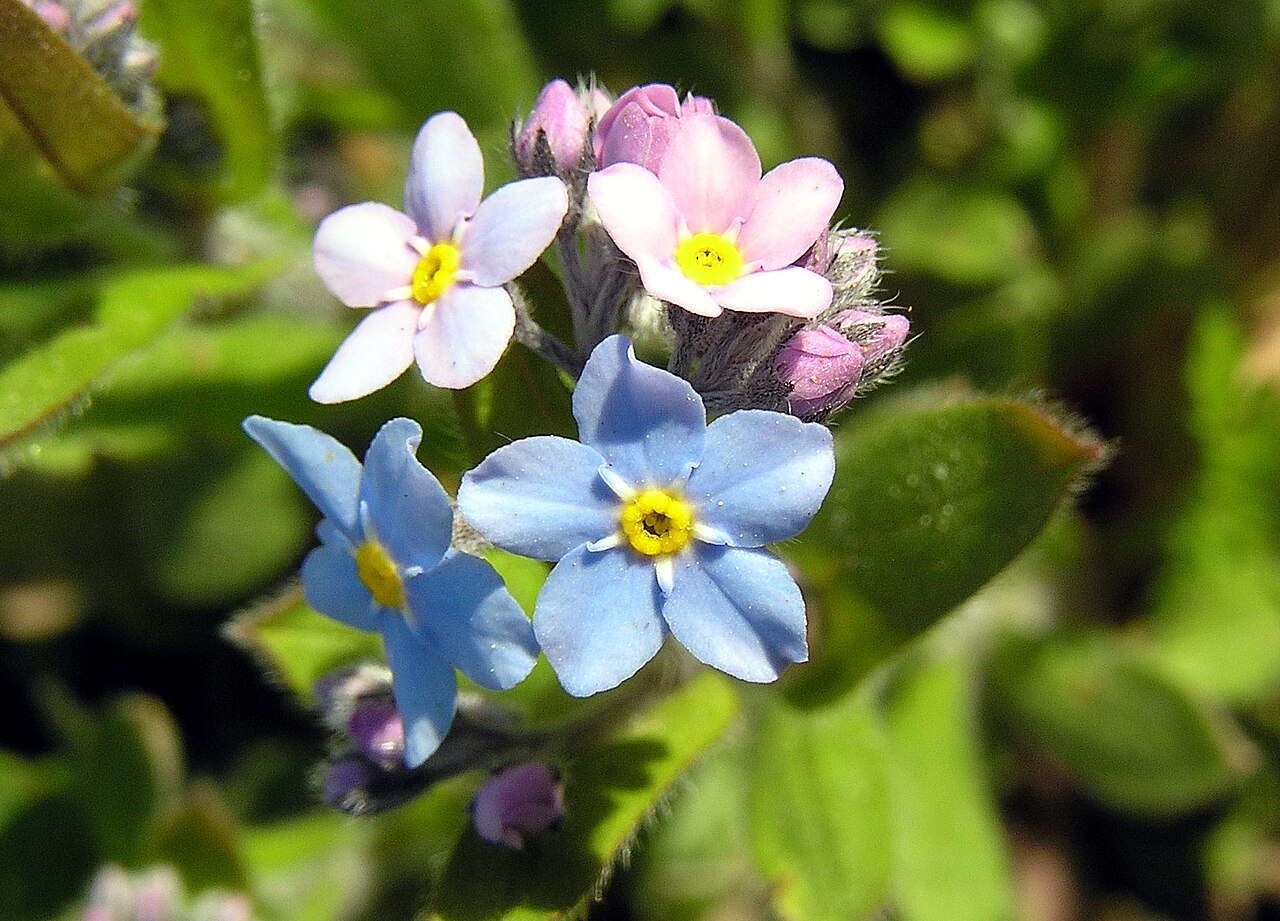
Myosotis | Forget-me-nots
Greek ‘mouse ear’. Language of flowers: true friendship and love, memory of loved ones. Used to raise awareness of Alzheimers.
|
 |
|
Begonia semperflorens | Wax begonia
Wax begonia flowers are often associated with symbolism related to gratitude, happiness, and resilience. In the language of flowers, they can represent sincerity, thankfulness, and the ability to overcome challenges.
|
 |
|
Oenothera biennis | Evening primrose, evening star, sundrop, weedy evening primrose, German rampion, hog weed, King’s cure-all, and fever-plant
Healing, wholeness, protection
|
 |
 At MORSL’s gardening sessions, we’re growing more than just plants—we’re cultivating meaningful, supportive conversations in a peaceful, welcoming space. Whether you're brand new to gardening or just want a nature break, this is the perfect place to dig in and connect with fellow students. We offer sessions from late April to early October. Each session starts in the MORSL lounge with intros and snacks before we head outside. Feel free to come to any session you can!Ìý


 MORSL's Interfaith Peace Garden, located at 3610 McTavish along the path to the main entrance, is visible evidence of dialogue on campus, care for the earth, and inclusion for all in the spirit of social and environmental sustainability. MORSL’s gardening activities, held from April to October, contribute to enhancing a sense of belonging as well as promoting interfaith and intercultural understanding for students from diverse religious, spiritual, and secular backgrounds through dialogue and cooperative action on campus.Ìý
 The garden started in Spring 2023, when MORSL’s director Carlene Gardner saw an opportunity to create a great community experience with students out of the untended space at the entrance to MORSL’s building. After consulting with the ɬÀï·¬ Grounds team and receiving support from the Sustainability Office in the form of a
  Each of the sessions brought about more transformations to the space, and generated enriching conversations that built a sense of community around this collective effort. Within the safe space of this interfaith project, students talked about their love of nature, family traditions, dating and marriage customs across cultures and spiritual experiences across faith traditions.ÌýÌý